

For decades, consumer electronics and household goods have been designed around a single assumption: when something breaks, it will be replaced. That logic has shaped manufacturing and retail while steadily eroding everyday repair skills. A growing movement is now pushing back by reintroducing repair as a shared civic practice.
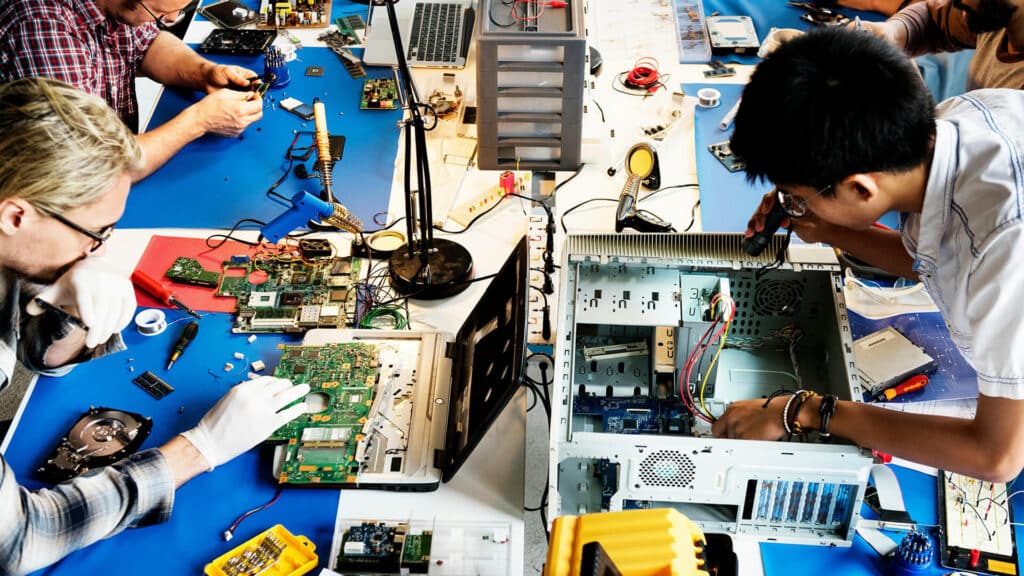
Volunteer-run repair cafés and fix-it clinics have expanded rapidly, offering free, hands-on help to people trying to fix everyday items—from lamps and radios to small kitchen appliances. Thousands of repair cafés now operate worldwide, supported by organizations that train volunteers and track the items people most frequently struggle to repair. Networks such as Fixit Clinic and Repair Café have organized thousands of community repair events, reflecting what organizers describe as a surge in public interest, per NBC.
Environmental concerns have helped drive this growth. Many discarded items fail because of minor, fixable issues like frayed cords, worn switches, or clogged components. Electronic waste is one of the fastest-growing waste streams globally, and advocates argue that reuse and repair offer far greater carbon savings than recycling alone, as reported by The Guardian.
Beyond sustainability, the movement’s deeper impact lies in how it reframes expertise. Repair cafés emphasize learning by doing, encouraging volunteers to explain each step so participants can understand—and sometimes complete—the repair themselves. Organizers describe this model as mutual aid rather than charity, blurring the line between expert and learner and strengthening local networks.
This cultural shift has coincided with renewed political attention to right-to-repair laws. In the U.S., several states now require manufacturers to provide access to parts, tools, and documentation, while similar regulations in Europe and the U.K. mandate that certain appliances be designed for repair and supported with spare parts for extended periods. Advocates argue these policies formalize a principle repair communities have long practiced: ownership should include the ability to maintain and modify one’s belongings.
Repair organizers also see their work as economic infrastructure. As traditional repair shops have disappeared from many high streets and main streets, volunteer networks have helped preserve technical knowledge while promoting repair as a viable job sector tied to reuse, refurbishment, and training.
Ultimately, the repair movement is less about fixing objects than about restoring relationships—to tools, materials, and one another. By rejecting the assumption that broken things are disposable, repair cafés model an alternative ethic grounded in care, participation, and shared skill.